

Setting up a new data product
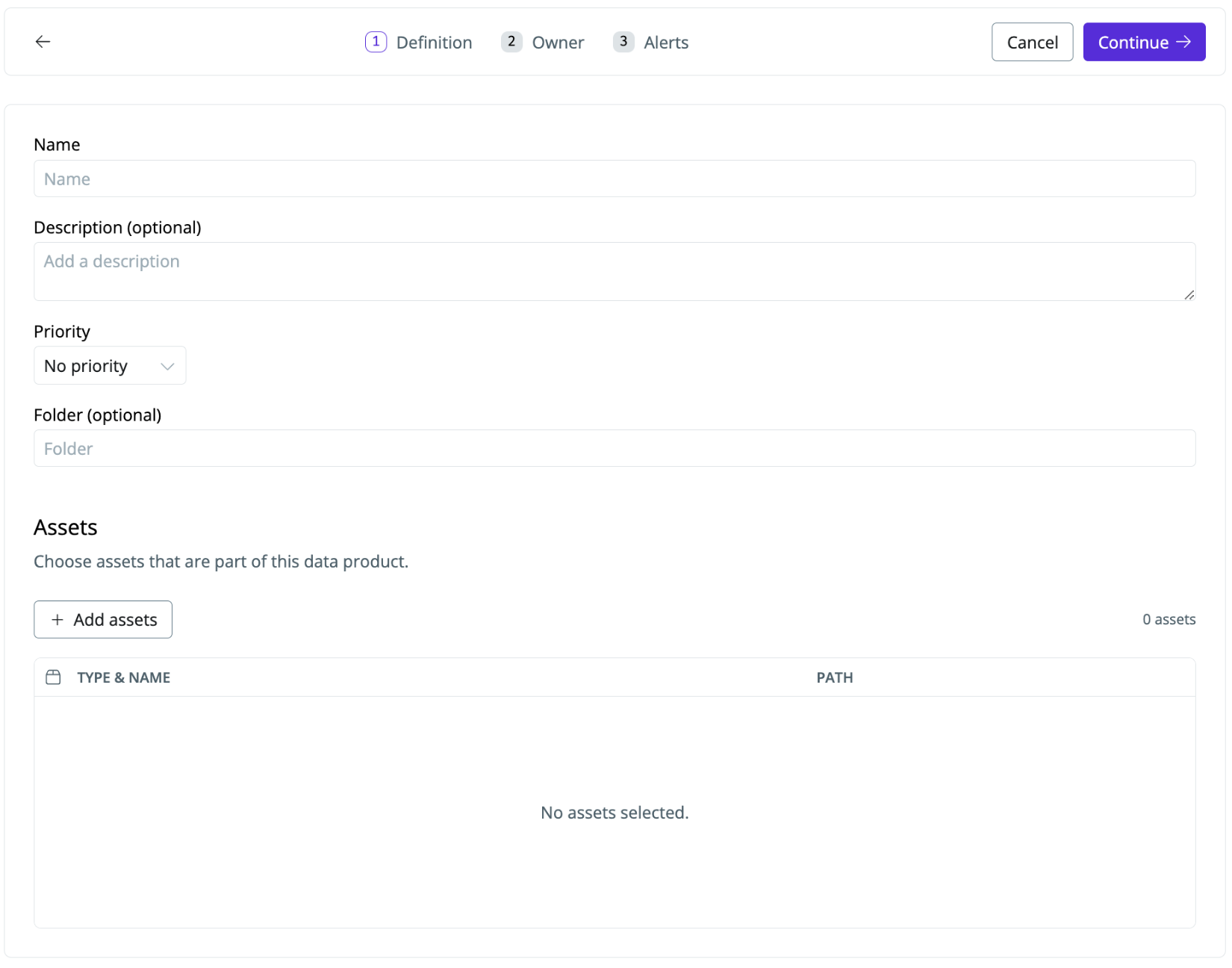
- Navigate to Products and click
Create product - Name your data product (e.g., marketing KPIs) and set a priority (i.e.,
P-1for business-critical data) - Assign a folder to the data product. This is useful for grouping related data products (optional)
- Use the
Assets selectionto find relevant assets. Use the browser to select or search for specific assets or annotations to select assets based on code definitions.
Setting ownership of a data product
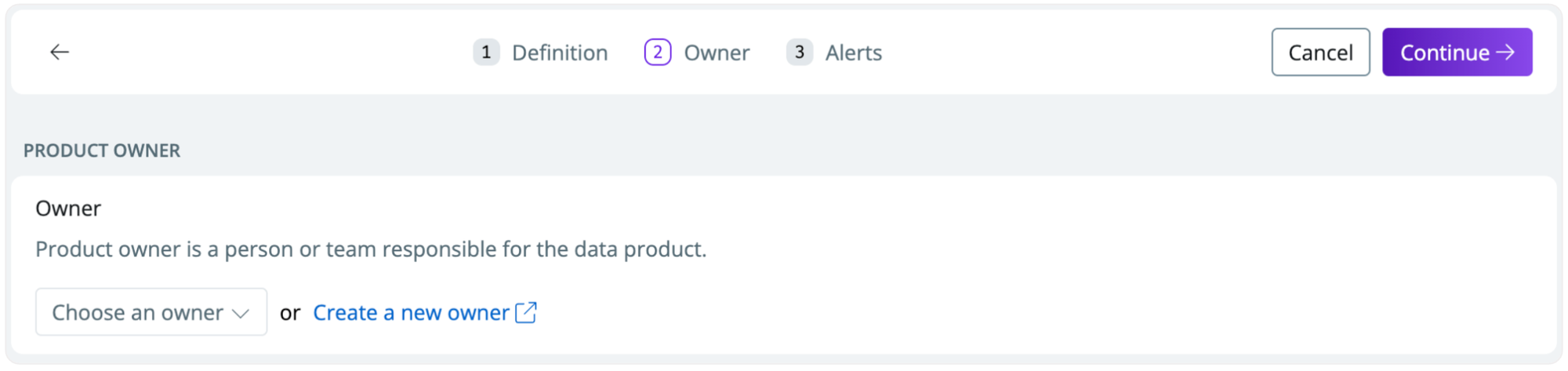
The Data Product owner is a person or team responsible for the data product. Owners can see an overview of everything they are responsible for and understand who the owners of critical data are downstream.Choose an ownerorCreate a new ownerto assign ownership to the data product. When you create an owner, you also set how owners are notified of issues (e.g., which Slack channel)
Setting alerts on a data product
- Toggle
Setup alertsto active alerts for issues on the data product. Owners of the data product are notified based on the Slack or Email settings you’ve defined for the owner (see Ownership overview)
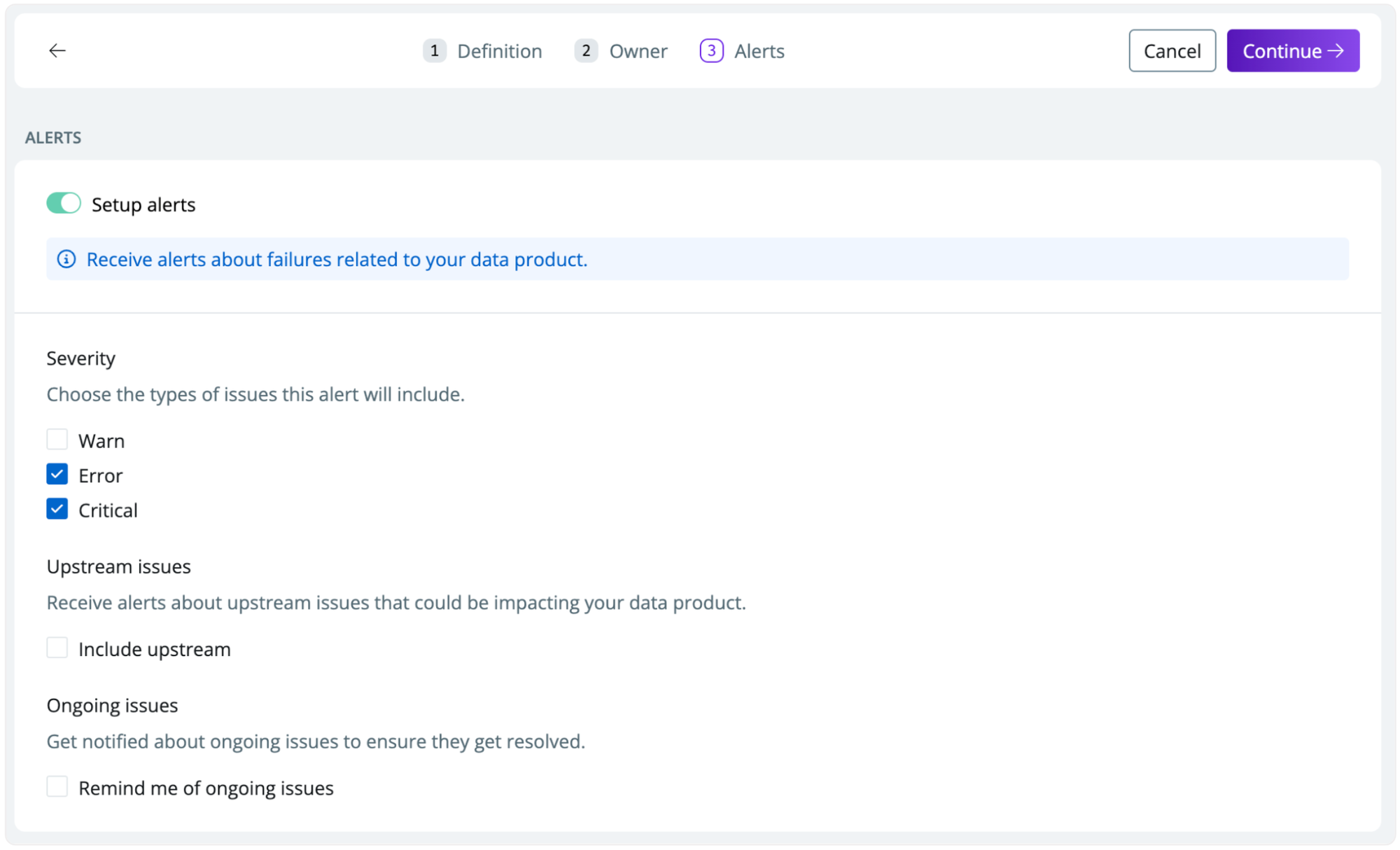
- Severity—choose which type of issues alerts will include (e.g., check
warnto be notified of warn-level test issues from dbt, SQLMesh, or Coalesce Transform) - Upstream issues—check if you want to receive alerts about upstream issues that could be impacting your data product
- Ongoing issues—get notified about ongoing issues to ensure they get resolved (will result in more alerts)
Creating a data product programmatically
The asset selection you build in the wizard is a membership query, and it can be written directly rather than clicked.- Public API —
synq.dataproducts.v2.DataproductsServicelists products, fetches one with its membership definition, resolves the assets currently in it, and upserts or deletes it. Reading needs a token withSCOPE_DATAPRODUCT_READ, writing needsSCOPE_DATAPRODUCT_EDIT. See the API reference and API scopes. - MCP — the data product tools let an AI assistant review what exists, draft a membership query, and save the product once you approve. Reading is covered by read-only consent; saving and deleting need the Governance permission and are confirmation-gated.