

- Create an alert directly in Settings → Alerts. You choose what it triggers on (specific assets, monitors, tests, or a data product), how it is configured, its message template, and where it is sent — all on the alert itself. This is the most direct option and doesn’t require an owner; see Routing alerts for the available destinations.
- Attach alerts to an owner, so they follow your ownership model and route through the channels configured on that owner. This is described below.
Owner-based alerts
Owner-based alerts are set based on your ownership definitions (see Ownership overview). Ownership can be defined in three main ways, serving as the backbone for owner-based alerts.- All assets—owns all assets. Use this to, e.g., create a
data teamowner and be notified of issues on any assets to your main alerting Slack channel. - Custom query—use this to select specific assets you want to be notified about using the browser or advanced filters. This is useful for setting up alerts for specific parts of your stack such as data assets in a specific database schema
- Data product—use this to be notified on issues on or upstream of a data product. This is helpful for owners of data products to be aware of issues that may impact them.
Setting up an alert for a new owner
- Follow the steps to create a new owner and set up alerts following the step-by-step wizard: Creating an owner
Editing alerts for an existing owner
-
Navigate to
Ownersand click on the owner you want to modify -
Click
Edit ownerto modify the owner name and its notification channels — a Slack channel and handles, a Microsoft Teams channel and mentions, email addresses, and Coalesce Quality users. Alerts routed through this owner are sent to whichever channels you set here.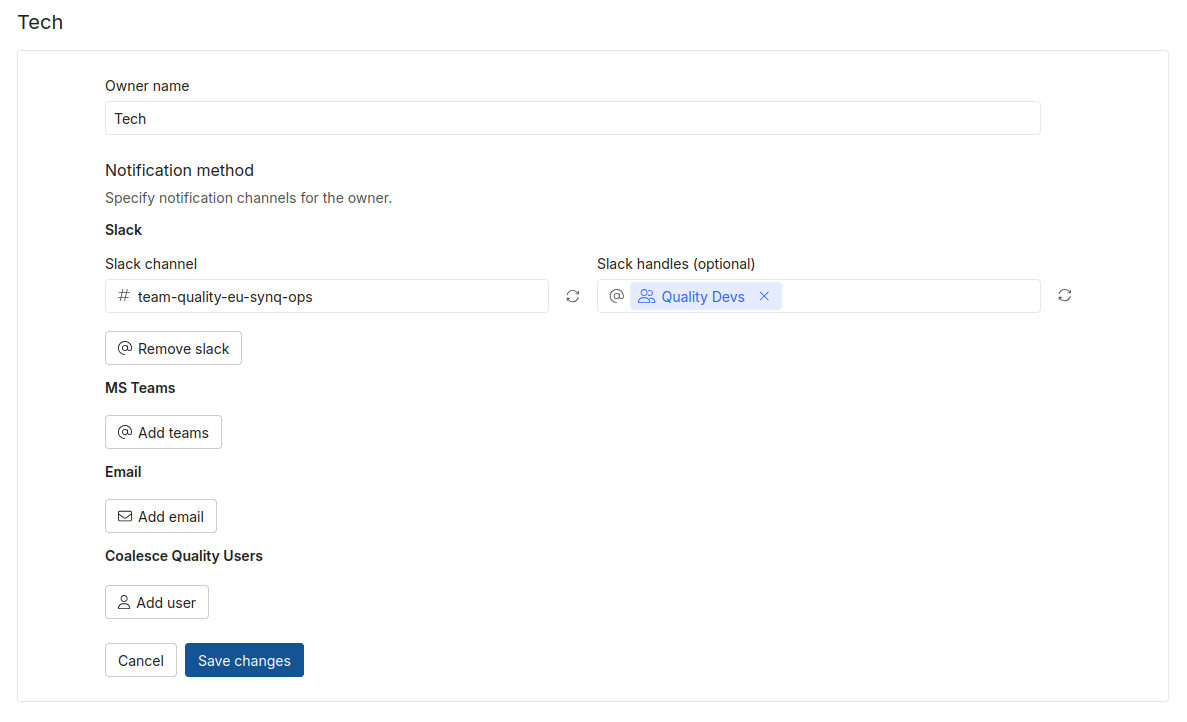
-
To add additional assets to the owner, click
Add owned assets -
To modify existing assets or alerts, click the three dots and select
Edit definitionsto edit the asset selection orEdit alertsto edit the alert configuration.
Configuring an alert
Alerts are highly configurable and can be set up to fit your needs.-
When creating an alert for an owner or editing an existing alert, you’re presented with the following settings.
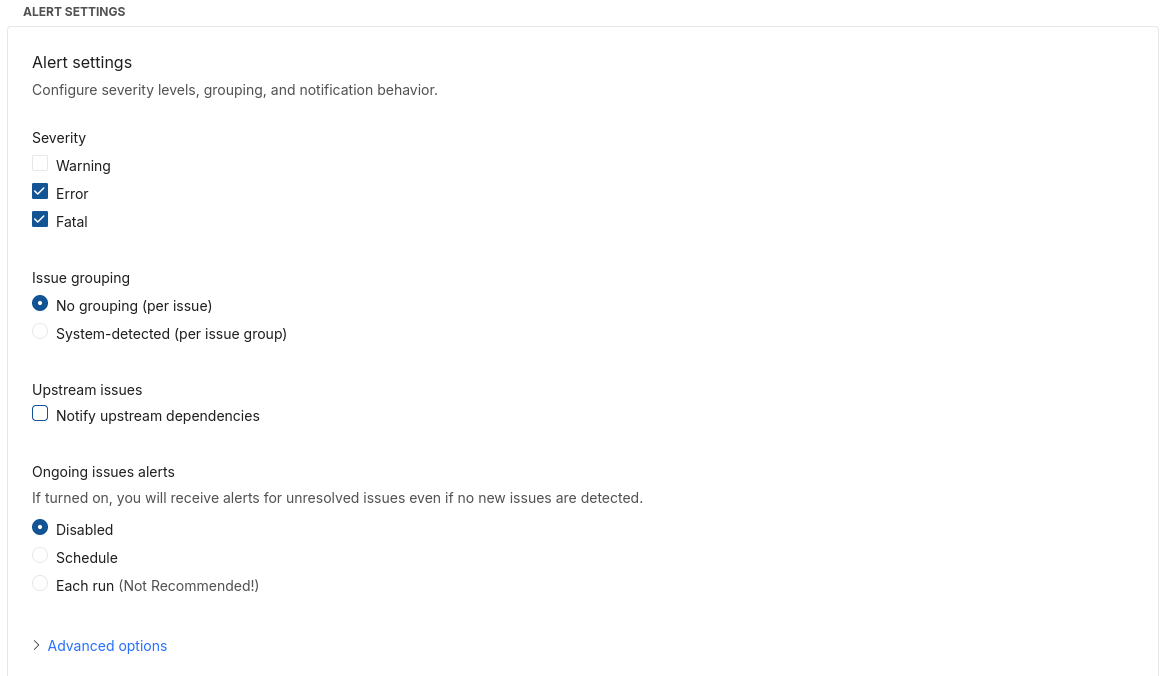
- Severity—choose which issue severities trigger the alert. Select any combination of
Critical,Error, andWarning(e.g., selectWarningto be notified of warn-level test issues from dbt, SQLMesh, or Coalesce Transform) - Upstream issues—check if you want to receive alerts about upstream issues that could be impacting your data product
- Ongoing issues alerts—by default you are only alerted when a new issue is detected. Turn this on to also be reminded about issues that are still unresolved:
- Disabled—only alert on new issues (default)
- Schedule—send one reminder per day at a time you choose (UTC)
- Each run—alert on every failed run. Not recommended, as it often produces too many alerts
- SQL test audit link—for SQL-based tests (dbt, SQLMesh, Coalesce Transform), include a link in the alert to the test audit report so recipients can inspect the rows that failed
- Custom email reply-to—for email alerts, set the reply-to address and the display name recipients see
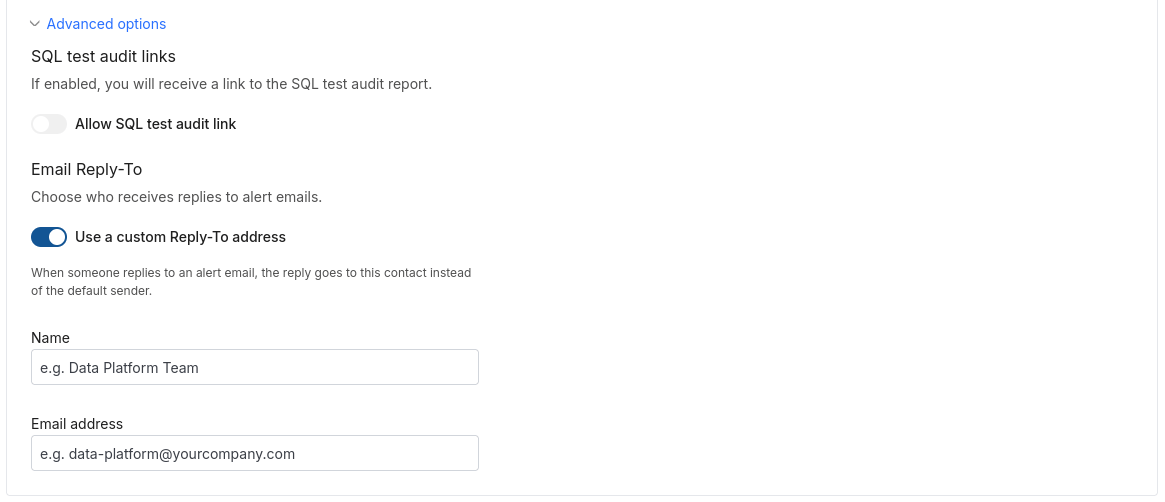
Advanced options — a SQL test audit link, and a custom reply-to address and display name for email alerts.