

Send directly to channels
When you create an alert in Settings → Alerts, you pick where it goes on the Targets step — no owner needed. Add any mix of:- a Slack channel
- a Microsoft Teams channel
- one or more email addresses
- a webhook, including PagerDuty and Opsgenie
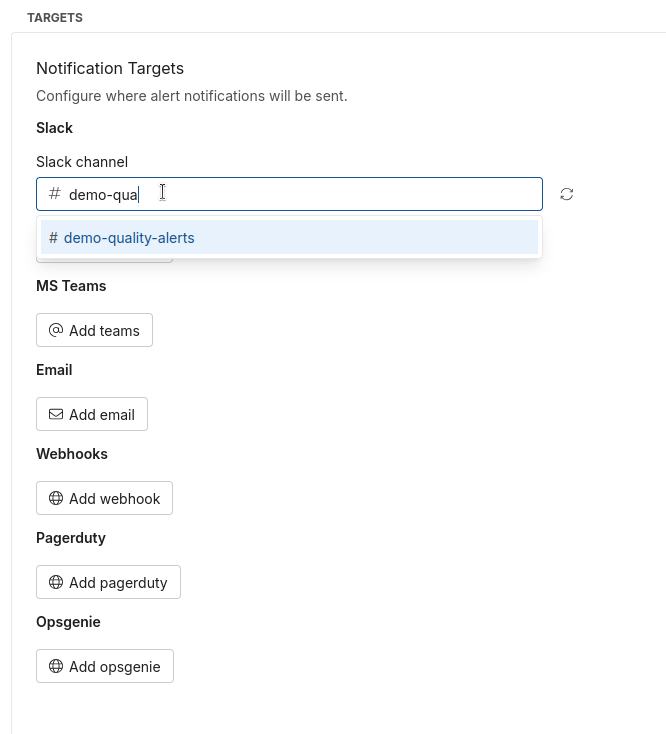
Choose where an alert is sent — Slack, Microsoft Teams, email, and webhooks, in any combination.
#data-alerts, or a webhook that opens a PagerDuty incident.
Not every destination is offered for every alert. Slack and Microsoft Teams are available for issue and schema-change alerts, email for every alert, and webhooks for issue alerts.
Route through an owner
Instead of naming channels on the alert, you can send it to an owner. The alert then goes to all the channels that owner has set up — its Slack channel, Microsoft Teams channel, email addresses, and Coalesce Quality users. You set those up on the owner (see Setting up alerts and Tagging owners). Alert routed to #operations-data-team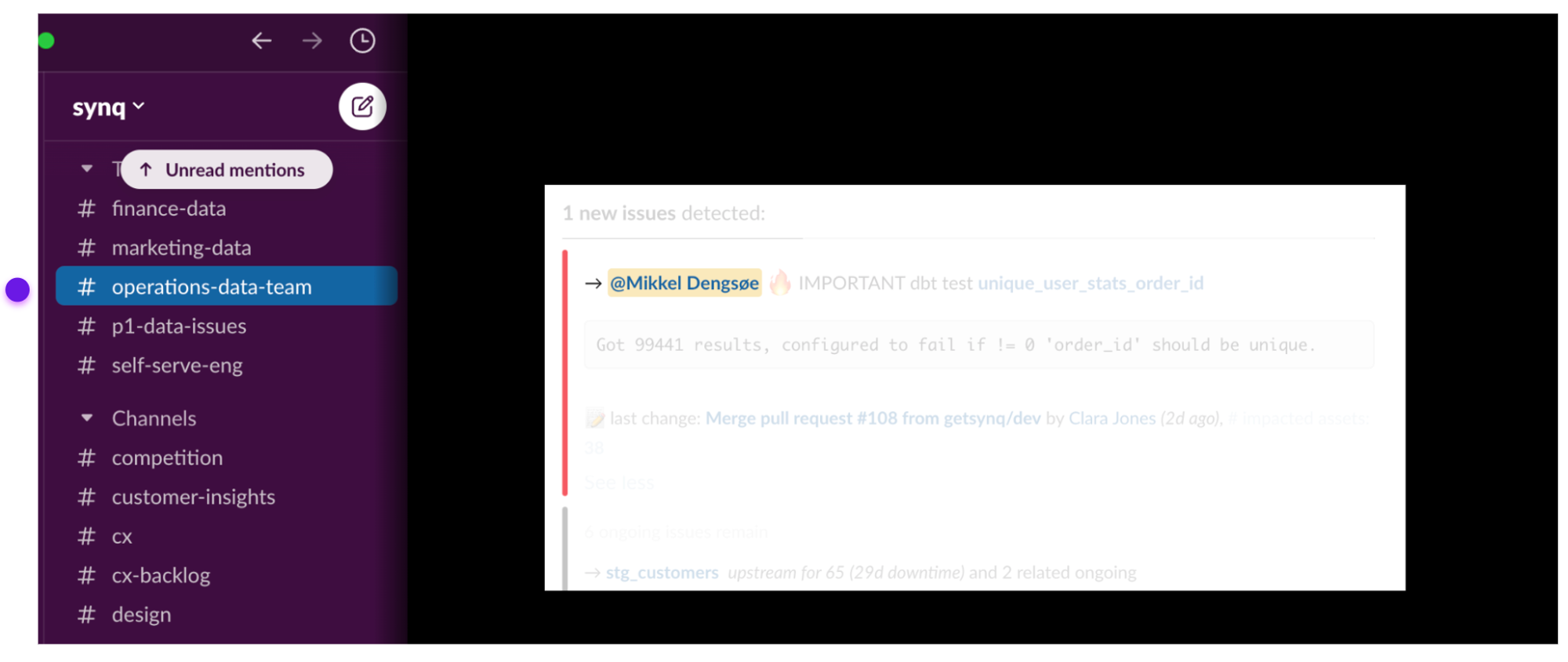
Managing routing programmatically
- Public API —
synq.alerts.services.v1.AlertsServicecovers alerts and their destinations. Reading needs a token withSCOPE_ALERTS_READ, writing needsSCOPE_ALERTS_EDIT. See the API reference and API scopes. - MCP — routing that goes through an owner is managed with the owner tools: an owner’s channels and the alert configuration on each of its ownerships are set in the same call that creates it. This needs the Governance permission.